Chiari Malformation
Evaluation and Neurosurgical Management of Chiari Malformation
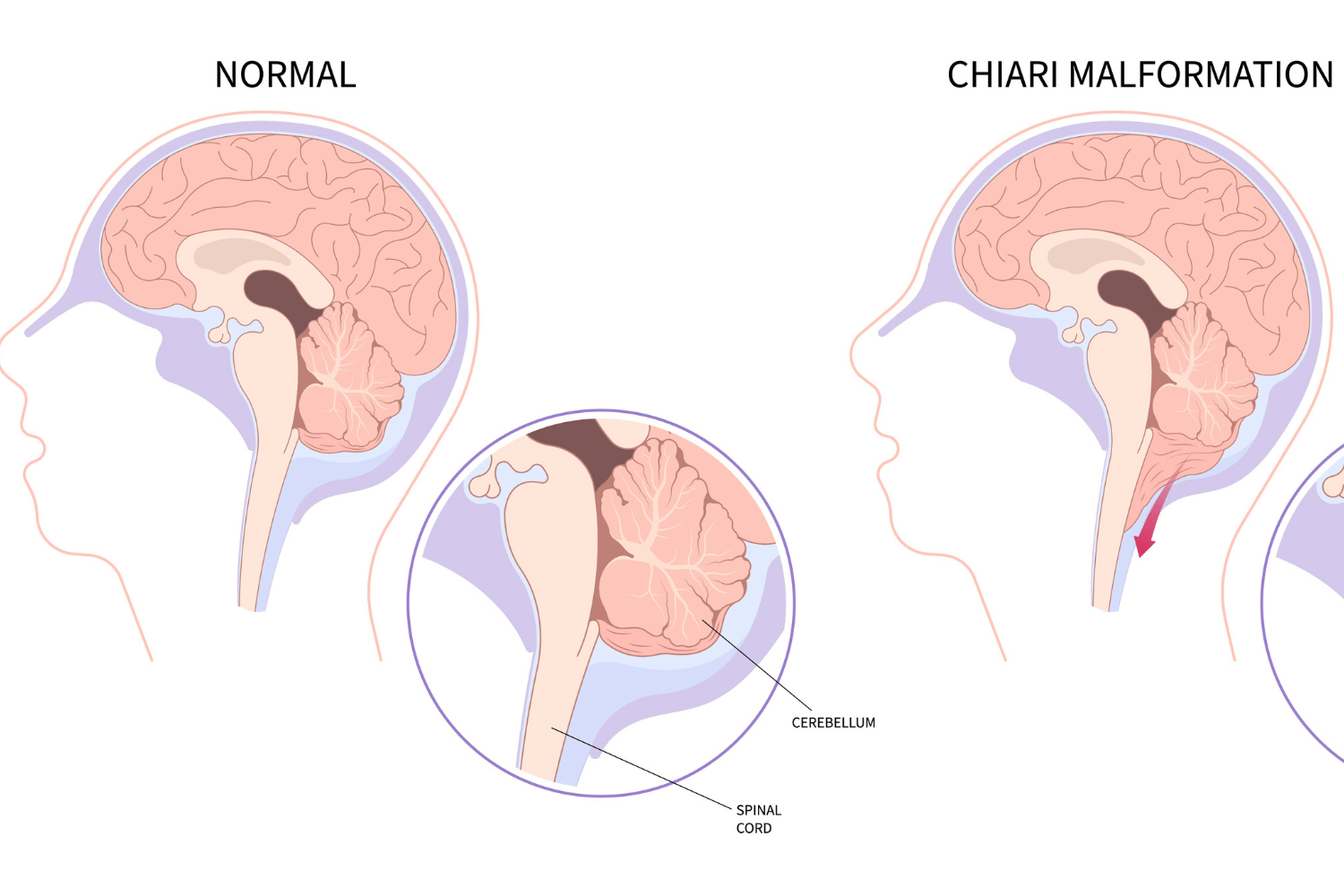
Chiari malformation is a structural condition in which part of the lower brain extends downward toward the spinal canal. This can affect normal cerebrospinal fluid circulation and, in some patients, place pressure on the brainstem or upper spinal cord.
Symptoms and severity vary considerably. Some people have no symptoms and discover the condition incidentally during MRI, while others experience headaches, balance problems, neurological symptoms, or spinal cord-related complications.
Dr. Shubham Vasudeva provides neurosurgical assessment for Chiari malformation and associated brain and spinal conditions.
Common Symptoms
Symptoms may include:
- Headaches, particularly after coughing or straining
- Neck pain
- Dizziness
- Balance difficulties
- Numbness or tingling
- Weakness
- Swallowing difficulties
- Vision disturbances
- Coordination problems
Some patients may also develop syringomyelia, where a fluid-filled cavity forms within the spinal cord.
Diagnosis
MRI is the principal investigation used to evaluate Chiari malformation. It allows detailed assessment of the brain, craniovertebral junction, spinal cord, and cerebrospinal fluid spaces.
The decision to treat is based on symptoms, neurological examination, imaging findings, and whether complications such as spinal cord compression or syringomyelia are present.
Treatment Approach
Patients without significant symptoms may only require clinical monitoring and follow-up imaging.
When symptoms are progressive or there is significant compression, surgical treatment may be considered. The objective of surgery is generally to create more space around the lower brain and improve cerebrospinal fluid circulation.
Personalized Brain and Spine Care
Because Chiari malformation can involve both the brain and upper spinal region, treatment requires detailed understanding of cranial and spinal anatomy.
Dr. Shubham’s training in brain, spine, minimally invasive, and craniovertebral junction-related neurosurgery supports comprehensive evaluation of these cases.
Treatment recommendations are individualized, with careful discussion of symptoms, imaging results, potential benefits, surgical considerations, and follow-up requirements.
Other Conditions
Need Expert Brain & Spine Care?
Get personalized guidance for brain, spine, trauma, and neurovascular concerns with a careful, patient-focused approach.