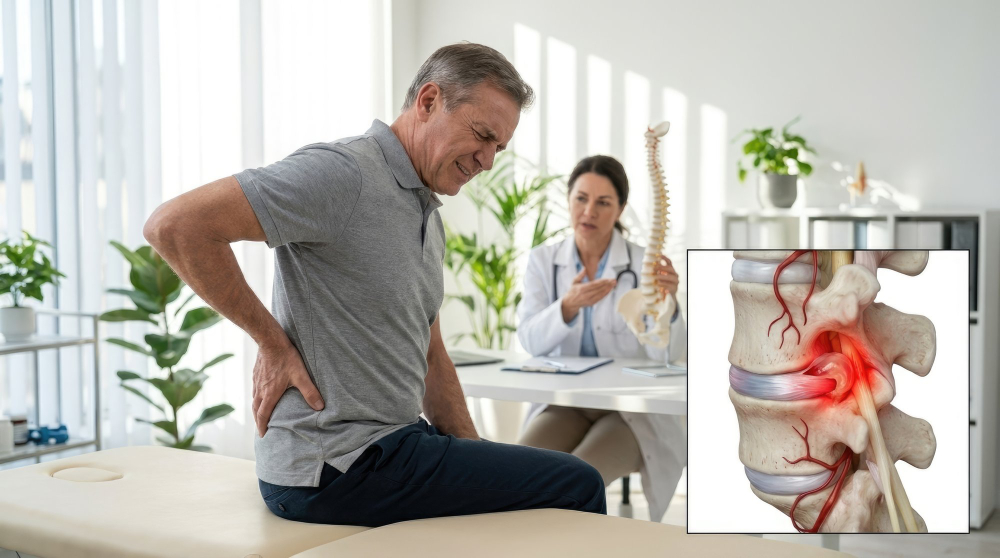
Back pain is common, but sometimes it signals a bigger problem. Many people hear about slipped disc and sciatica, but what do these terms mean? A slipped disc, also called a prolapsed intervertebral disc (PIVD), can press on nerves and cause pain. Sciatica is a type of pain that travels down the leg. While most back pain gets better with rest, some cases may need surgery. Understanding the signs and knowing when to seek help is important for your health.
What Is a Slipped Disc (PIVD)?
A slipped disc happens when the soft center of a spinal disc pushes out through a crack in the tougher outer layer. Doctors also call this a herniated disc or PIVD. The spine has many small bones called vertebrae. Discs sit between these bones and act as cushions. However, if a disc slips, it can press on nearby nerves. This pressure may cause pain, numbness, or weakness. For many people, slipped disc treatment starts with simple steps like rest and gentle exercise.
Understanding Sciatica
Sciatica is not a disease, but a symptom. It refers to pain that travels along the path of the sciatic nerve. This nerve runs from your lower back, through the hips, and down each leg. Often, a slipped disc causes sciatica by pressing on the nerve. As a result, you may feel sharp or burning pain in your leg. Sometimes, you may also notice tingling or weakness. Although sciatica can be scary, most cases improve with time and care.
Common Symptoms of Slipped Disc and Sciatica
Symptoms can vary from person to person. However, some signs are more common. If you have a slipped disc or sciatica, you may notice:
Sometimes, symptoms may come and go. Still, if you notice sudden loss of bladder or bowel control, seek help right away. This can be a sign of a serious problem.
Causes and Risk Factors
Many things can lead to a slipped disc or sciatica. For example, lifting heavy objects the wrong way can strain your back. Age is also a factor, as discs lose flexibility over time. In addition, being overweight puts extra pressure on your spine. Other risk factors include:
Even though these factors increase risk, anyone can develop back pain. Knowing the causes helps you take steps to protect your spine.
How Are Slipped Disc and Sciatica Diagnosed?
Doctors use several methods to find the cause of back pain. First, they ask about your symptoms and medical history. Next, they may do a physical exam to check strength and reflexes. Sometimes, imaging tests like MRI or CT scans help show the problem. These tests can reveal if a disc is pressing on a nerve. In some cases, doctors may order X-rays to rule out other causes. Early diagnosis can lead to better herniated disc treatment and faster recovery.
Treatment Options: Conservative vs. Surgical
Most people with slipped disc and sciatica get better without surgery. Conservative treatments are usually tried first. These may include:
However, if pain does not improve, doctors may suggest other options. In rare cases, injections or surgery may be needed. Sciatica surgery indications include severe pain, weakness, or loss of control over bladder or bowel. Always talk to your doctor about the best treatment for you. If you are searching for slipped disc treatment near me, look for clinics with experienced spine specialists.
When Does Back Pain Need Surgery?
Although most back pain improves with simple care, surgery is sometimes needed. For example, if pain lasts more than six weeks and does not get better, your doctor may suggest surgery. Other signs you may need surgery include:
When to see a spine surgeon depends on your symptoms and how they affect your life. Surgery can help by removing the part of the disc that presses on the nerve. Still, it is important to weigh the risks and benefits with your doctor.
Prevention and Lifestyle Tips
Taking care of your back can lower your risk of slipped disc and sciatica. For instance, regular exercise keeps your back muscles strong. In addition, maintaining a healthy weight reduces strain on your spine. Try these tips to protect your back:
Even small changes can make a big difference. If you have questions about back pain causes or herniated disc treatment, speak with a healthcare provider. Early care can prevent problems from getting worse. Consult Dr. Shubham Vasudeva for treatment.